

GPS systems have revolutionized the construction industry, and when it comes to bulldozers, they play a crucial role in enhancing efficiency, accuracy, and safety. As a leading bulldozer supplier, I've witnessed firsthand the transformative power of GPS technology in the operation of these heavy - duty machines. In this blog, I'll delve into how GPS systems work on bulldozers and why they are a game - changer for the construction sector.
1. The Basics of GPS
Before we discuss how GPS works on bulldozers, it's essential to understand the fundamentals of the Global Positioning System. GPS is a satellite - based navigation system that provides location and time information in all weather conditions, anywhere on or near the Earth. It consists of a constellation of at least 24 satellites orbiting the Earth, ground control stations, and user receivers.
The satellites continuously transmit signals that contain information about their position and the time the signal was sent. A GPS receiver on the bulldozer picks up these signals from multiple satellites. By measuring the time it takes for the signals to travel from the satellites to the receiver, the receiver can calculate the distance to each satellite. Using a process called trilateration, the receiver can then determine its precise location on the Earth's surface.
2. GPS Components on a Bulldozer
A typical GPS system on a bulldozer consists of several key components:
GPS Receivers
These are the devices that pick up the signals from the GPS satellites. Usually, multiple receivers are installed on the bulldozer to ensure accurate positioning. For example, one receiver might be placed on the blade of the bulldozer, while another is located on the main body of the machine. This allows for precise measurement of the blade's position relative to the rest of the bulldozer and the ground.
Antennas
Antennas are used to receive the satellite signals. They need to be properly positioned on the bulldozer to have a clear line - of - sight to the satellites. High - quality antennas are essential for strong and reliable signal reception, especially in areas with obstacles such as tall buildings or dense foliage.
In - cab Display Unit
This is the interface that the bulldozer operator interacts with. It shows the real - time position of the bulldozer, the design surface or grade that needs to be achieved, and other relevant information. The display unit can also provide visual and auditory alerts to the operator, helping them stay on track and make adjustments as needed.
Control System
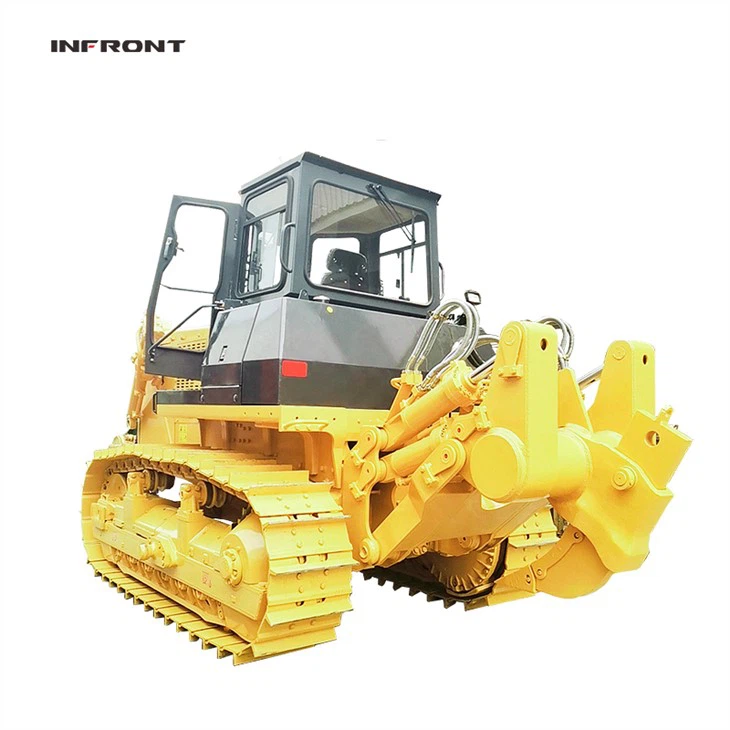
The control system of the GPS on the bulldozer is responsible for processing the data received from the receivers and antennas. It uses this data to control the movement of the bulldozer's blade. For example, if the GPS system detects that the blade is not at the correct elevation or angle, it can automatically adjust the hydraulic cylinders that control the blade to bring it into the correct position.
3. How GPS Enables Precision Grading
One of the most significant applications of GPS on bulldozers is precision grading. In traditional construction methods, achieving the correct grade or slope of the ground was a time - consuming and error - prone process. It often relied on manual measurements and the skill of the operator.
With GPS technology, precision grading becomes much more accurate and efficient. The design surface or grade is first created using a computer - aided design (CAD) software. This design is then transferred to the in - cab display unit of the bulldozer's GPS system.
As the bulldozer moves across the site, the GPS receivers continuously monitor the position of the blade. The control system compares the actual position of the blade with the design surface. If there is a deviation, the system automatically adjusts the blade's position to match the design. This ensures that the ground is graded to the exact specifications, reducing the need for rework and saving time and materials.
4. Improving Safety on the Construction Site
GPS systems also contribute to improved safety on construction sites. By providing real - time location information, they help prevent collisions between bulldozers and other equipment or personnel. For example, if another vehicle or worker enters the vicinity of the bulldozer, the GPS system can alert the operator through the in - cab display or an auditory warning.
In addition, GPS can be used to monitor the speed and movement of the bulldozer. If the bulldozer is moving too fast or in an unsafe manner, the system can send alerts to the operator or the site supervisor. This helps enforce safety protocols and reduces the risk of accidents.
5. Enhancing Productivity
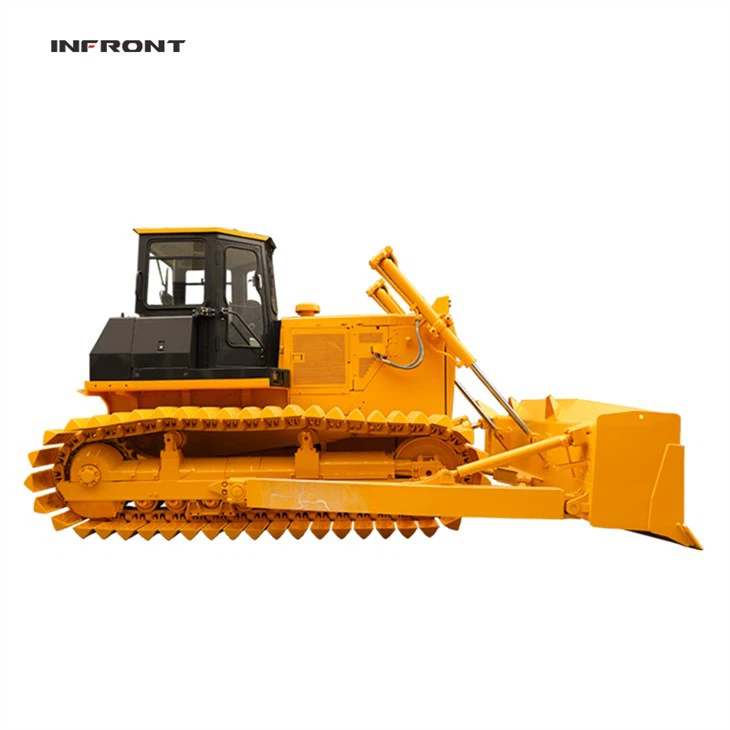
Productivity is a key concern in the construction industry, and GPS systems on bulldozers can significantly boost it. With precise positioning and grading capabilities, bulldozers can complete tasks more quickly and accurately. Operators can work more efficiently, as they don't have to spend as much time on manual measurements and adjustments.
Moreover, GPS systems allow for better planning and scheduling of construction projects. Project managers can use the data collected by the GPS systems to track the progress of the bulldozer operations, identify bottlenecks, and make informed decisions to optimize the workflow.
6. Our Bulldozer Offerings with GPS Technology
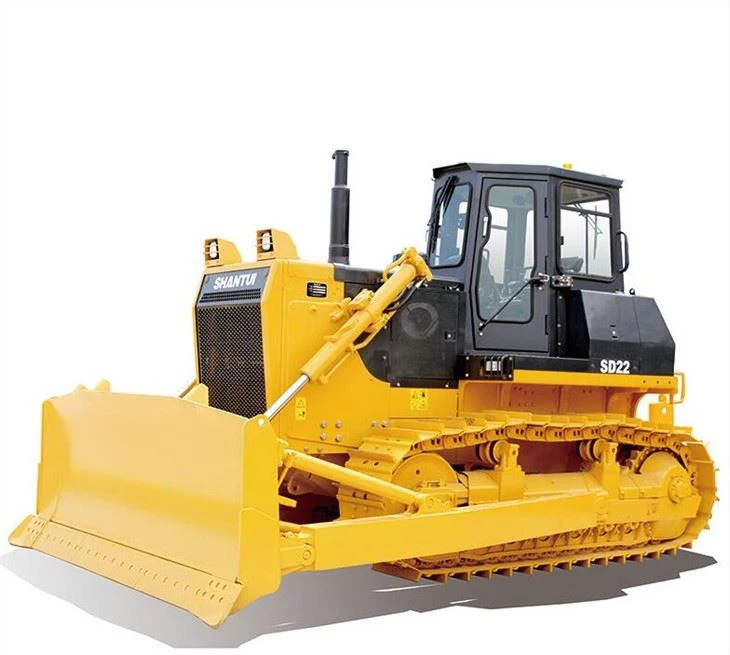
As a bulldozer supplier, we offer a range of bulldozers equipped with state - of - the - art GPS systems. Our [Crawler Hydraulic Bulldozer](/bulldozer/crawler - hydraulic - excavator.html) is designed for heavy - duty construction projects. It features a highly accurate GPS system that ensures precise grading and efficient operation. The advanced control system of the GPS can adapt to different soil conditions and project requirements, providing maximum performance.
Our [Bruder Bulldozer](/bulldozer/bruder - bulldozer.html) is another popular choice. It combines durability with the latest GPS technology. The in - cab display unit is user - friendly, allowing operators to easily access and interpret the GPS data. This bulldozer is ideal for both small - scale and large - scale construction sites.
For those looking for a brand - new solution, our [Brand New Bulldozer](/bulldozer/brand - new - bulldozer.html) comes with the most up - to - date GPS features. It offers enhanced connectivity options, allowing for seamless integration with other construction management software. This enables better data sharing and collaboration among different stakeholders on the construction site.
7. Conclusion and Call to Action
In conclusion, GPS systems have become an indispensable part of modern bulldozer operations. They offer numerous benefits, including precision grading, improved safety, and enhanced productivity. As a bulldozer supplier, we are committed to providing our customers with the best - in - class bulldozers equipped with advanced GPS technology.
If you're in the market for a high - quality bulldozer with GPS capabilities, we'd love to hear from you. Whether you're working on a small residential project or a large - scale infrastructure development, our team of experts can help you find the perfect bulldozer to meet your needs. Contact us today to start a procurement discussion and take your construction projects to the next level.
References
- Kaplan, E. D., & Hegarty, C. (Eds.). (2005). Understanding GPS: Principles and applications. Artech House.
- Parkinson, B. W., & Spilker, J. J. (1996). Global Positioning System: Theory and applications. American Institute of Aeronautics and Astronautics.
- Trimble. (2023). GPS technology for construction equipment. Retrieved from Trimble official website.


