

Hey there! As a supplier of motor graders, I've had my fair share of folks asking about the different types of transmissions these machines usually have. So, I thought I'd take a few minutes to break it down for you.
First off, let's talk about what a transmission does in a motor grader. Simply put, it's responsible for transferring power from the engine to the wheels, allowing the grader to move forward, backward, and change speeds. It's a crucial part of the machine, and the type of transmission can have a big impact on how well the grader performs.
There are three main types of transmissions commonly found in motor graders: mechanical, hydrostatic, and powershift. Each has its own set of pros and cons, and the choice of which one to use depends on a variety of factors, such as the specific application, operator preference, and budget.
Let's start with mechanical transmissions. These are the oldest and simplest type of transmission used in motor graders. They use a series of gears and clutches to transfer power from the engine to the wheels. Mechanical transmissions are known for their durability and reliability, making them a popular choice for heavy-duty applications. They're also relatively easy to maintain, which is a big plus for many operators.
One of the main advantages of mechanical transmissions is their efficiency. Because they use a direct mechanical connection between the engine and the wheels, there's less power loss compared to other types of transmissions. This means that mechanical transmissions can deliver more power to the wheels, resulting in better performance and fuel economy.
However, mechanical transmissions also have some drawbacks. One of the biggest issues is their lack of flexibility. With a mechanical transmission, you have to manually shift gears, which can be a hassle, especially in stop-and-go traffic or when working on uneven terrain. This can make it difficult for operators to maintain a consistent speed and can also lead to fatigue over long periods of use.
Another disadvantage of mechanical transmissions is their limited speed range. Most mechanical transmissions have a fixed number of gears, which means that you may not be able to find the perfect gear for every situation. This can result in the engine running at an inefficient speed, which can increase fuel consumption and reduce performance.

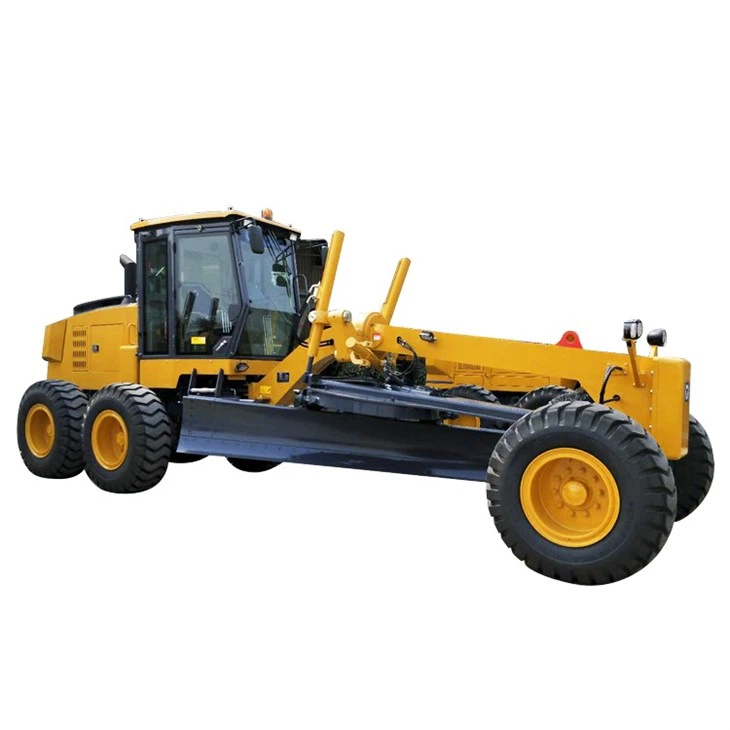
Next up, we have hydrostatic transmissions. Hydrostatic transmissions use hydraulic fluid to transfer power from the engine to the wheels. They're known for their smooth operation and precise control, making them a popular choice for applications that require a high degree of maneuverability, such as grading and leveling.
One of the main advantages of hydrostatic transmissions is their infinite speed range. Unlike mechanical transmissions, which have a fixed number of gears, hydrostatic transmissions can provide a continuous range of speeds, allowing operators to fine-tune the grader's speed to match the specific task at hand. This can result in better performance and more efficient operation.
Another advantage of hydrostatic transmissions is their ease of use. With a hydrostatic transmission, you don't have to manually shift gears, which makes it much easier to operate the grader, especially for inexperienced operators. This can also reduce operator fatigue and increase productivity.
However, hydrostatic transmissions also have some drawbacks. One of the biggest issues is their relatively low efficiency. Because hydrostatic transmissions use hydraulic fluid to transfer power, there's more power loss compared to mechanical transmissions. This means that hydrostatic transmissions can be less fuel-efficient and may require more maintenance to keep them running smoothly.
Another disadvantage of hydrostatic transmissions is their high cost. Hydrostatic transmissions are more complex and expensive to manufacture than mechanical transmissions, which means that they can be more expensive to purchase and maintain. This can make them a less attractive option for budget-conscious buyers.
Finally, we have powershift transmissions. Powershift transmissions are a hybrid between mechanical and hydrostatic transmissions. They use a combination of gears and hydraulic clutches to transfer power from the engine to the wheels. Powershift transmissions are known for their smooth operation and quick shifting, making them a popular choice for applications that require a high degree of performance and efficiency.
One of the main advantages of powershift transmissions is their flexibility. With a powershift transmission, you can shift gears automatically or manually, depending on your preference. This allows you to adapt to different operating conditions and can make it easier to maintain a consistent speed.
Another advantage of powershift transmissions is their high torque capacity. Powershift transmissions can deliver more torque to the wheels compared to mechanical and hydrostatic transmissions, which means that they can handle heavier loads and more challenging terrain. This makes them a popular choice for heavy-duty applications, such as road construction and mining.
However, powershift transmissions also have some drawbacks. One of the biggest issues is their complexity. Powershift transmissions are more complex and expensive to manufacture than mechanical transmissions, which means that they can be more expensive to purchase and maintain. This can make them a less attractive option for budget-conscious buyers.
Another disadvantage of powershift transmissions is their relatively low fuel efficiency. Because powershift transmissions use a combination of gears and hydraulic clutches, there's more power loss compared to mechanical transmissions. This means that powershift transmissions can be less fuel-efficient and may require more maintenance to keep them running smoothly.
So, which type of transmission is right for you? Well, that depends on a variety of factors, such as the specific application, operator preference, and budget. If you're looking for a durable and reliable transmission for heavy-duty applications, a mechanical transmission may be the best choice. If you need a transmission that provides smooth operation and precise control, a hydrostatic transmission may be the way to go. And if you're looking for a transmission that offers a combination of performance and efficiency, a powershift transmission may be the ideal option.
At our company, we offer a wide range of motor graders with different types of transmissions to meet the needs of our customers. Whether you're looking for an Earthworks Ride-on Motor Grader, a Road Construction Traction Motor Grader, or a New Hydraulic Motor Grader, we have the perfect machine for you.
If you're interested in learning more about our motor graders or have any questions about the different types of transmissions, please don't hesitate to contact us. We'd be happy to help you find the right machine for your needs and provide you with all the information you need to make an informed decision.
In conclusion, the type of transmission you choose for your motor grader can have a big impact on its performance, efficiency, and cost. By understanding the pros and cons of each type of transmission, you can make an informed decision and choose the machine that's right for you. So, if you're in the market for a motor grader, take the time to consider your options and choose the transmission that best meets your needs.
References
- SAE International. "Vehicle Transmission Systems."
- Caterpillar Inc. "Motor Grader Operator's Manual."
- John Deere. "Motor Grader Product Guide."


